Field 1
Library & Information SpecialistField
- Related Qualifications:
- Librarian
- School Librarian
- IT Passport

A librarian is an "information specialist" who provides information that various users need. To work in rapidly evolving library environments, students must develop strong information management skils. At our college, faculty members with work experience at the National Diet Library lead the program, training students to become librarians with braod knowledge and advanced skills.
Key Learning Points
-

Courses led by faculty with experience at the
National Diet LibrarySince the college was first founded, faculty members with experience at the National Diet Library have been teaching librarian courses and seminars as full-time instructors. Students deepen their understanding of the field by learning directly from faculty with hands-on experience, and from the practical examples that they share.
-
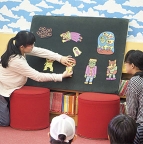
Acquiring Practical Librarian Skills
Students can acquire practical librarian skills, such as storytelling and book talks. They also gain experience with chilren's cultural materials, such as picture-story shows and panel theater, commonly used in library reading events.

Field 2
Psychology & Healthcare/WelfareField
- Related Qualifications:
- Peer Helper
- Medical Office Administration
- Sign Language Proficiency Test

Students deepen their understanding of psychology, studying mental processes and human development. They also explore the increasingly important field of welfare, covering eveythning from basics to current issues and challenges. The curriculum is designed by faculty with practical experience in the welfare industry and clinics, is linked to qualifications such as Peer Helper and Medical Office Administration, allowing students to learn through hands-on, practice based exercises.
Key Learning Points
-

Hands-on Learning through Extensive Practicum
Clinical PsychologyStudents learn the fundamentals of psychological treatment and methods of psychological support. The curriculum offers extensive hands-on learning opportunities, such as role-playing and group exercises in which students assume the roles of patient and therapist, allowing them to gain practical experience.
-

Opportunity to Take the Sign Language Proficiency Test
Students learn sign language while studying hearing impairments and welfare. Many also choose to take the Sign Language Proficiency Test, making this a popular course that also helps to enhance their communication skills.

Field 3
Subculture & Japanese Literature Field
- Related Qualifications:
- Japanese Language Proficiency Test
- Kanji Aptitude Test
- Calligraphy (Brush & Pen) Examination

In contemporary Japanese culture, "subculture" is an indispensable element. By studying and analyzing manga, anime, games, and other forms of ppopular culture, students acquire extensive knowledge and develop logical thinking skills. In Japanese literature courses, students engage in creative activities such as writing novels, children's literature, poetry, tanka, haiku, and practicing calligraphy, publishing booklets and presenting exhibitions, cultivating rich expressive abilities.
Key Learning Points
-

Students Manage
Editing and DesignWe offer courses and seminars in which students write novels, poems, and tanka. For the graduation project, these works are compiled into a single booklet and distributed. Students also manage the cover design and editing, gaining hands-on experience of the publishing process.
-

Calligraphy Exhibition
Featuring Seal Engraving and Carved LetteringIn calligraphy classes and seminars, students explore a variety of calligraphy styles and also work on ink painting, seal engraving, and carved lettering. Graduation works are exhibited at a venue in Tatsuno Town, where they are open to the public.

Field 4
English and International Culture Field
- Related Qualifications:
- TOEIC®
- EIKEN (Practical English Proficiency Test)
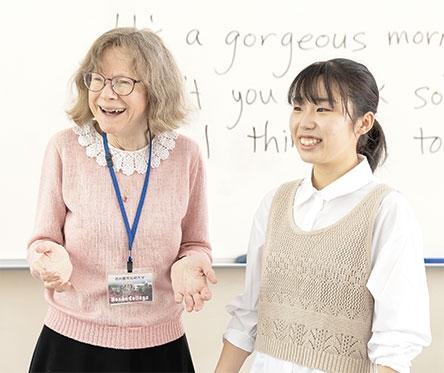
In this field, students build not only the core skills of speaking, listening, reading, and writing, but also practical English abilities for tourism, business, and media literacy—such as interpreting articles and advertisements. The field develops well-rounded English proficiency that can applied to various real-world contexts. In addition to language study, students deepen their understanding of the cultures that shape the language, preparing them to engage confidently as global citizens.
Key Learning Points
-
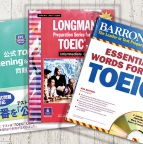
TOEIC🄬
Structured Support for English CertificationWe offer courses designed to help students obtain qualifications such as the TOEIC®, which is widely used as a benchmark for English proficiency in the workplace and for promotion. Regular practice tests and supportive class structures make it easier for students to prepare for and take these exams.
-

Learning Practical English through
Film and the WebStudents study practical English expressions used in movies and websites while deepening their understanding of other cultures. Course activities include practicing dialogues with foreign teachers and participating in discussions about various works.
Field 5
Information and Regional StudiesField
- Related Qualifications:
- Web Design Skills Certification
- Microsoft Office Specialist
- IT Passport

Students gain practical skills and in accurately processing information, communicating online, and designing websites. The combination of these abilities is essential in today’s complex and ever-changing society. At the same time, students gain a deeper understanding of Japan's traditional culture
Key Learning Points
-
Develop Information Literacy
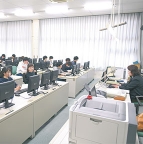
In today’s information-driven society, the ability to effectively use PCs and other information technologies is essential. At our college, students start by learning the basics of ICT (Information and Communication Technology) and progressively enhance their presentation skills using computers.
-
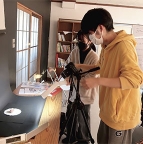
Collaborate with the Local Community and
Create Certification-Linked Web ContentIn the Information Seminar, students take on real website projects that comissioned by local businesses and shops. This hands-on application of classroom web-development knowledge not only provides valuable practical experience but also supports preparation for certifications such as the Web Design Skills Test.